
Found Footage Horror: Complete History, Key Films & Future of the Genre
Explore the complete history, defining films, narrative elements, cultural impact and evolving future of the found footage horror genre, from early precursors to global and Latin American contributions.
2/26/202617 min read
Introduction
Horror cinema has always played with an irresistible premise: making us believe that the impossible can be real. Among all its subgenres, Found Footage Horror — also known as found footage — has become one of the most unsettling and effective at achieving this. The key lies in its way of telling stories: we do not see a classic narrative with perfect framing and calculated background music, but rather recordings supposedly found, with handheld cameras, distorted sounds and abrupt cuts that convey the sensation of authenticity.
This style makes us, as viewers, feel both complicit and intrusive at the same time: we not only observe the horror, but it seems as if we are discovering it ourselves in real time. That closeness is what turns movies like The Blair Witch Project or Paranormal Activity into such intense experiences: the constant doubt of whether what we see could have really happened.
But Found Footage Horror goes beyond international box office hits. Its influence has spread to independent productions, series, video games and even Latin American cinema, where directors like Edwin Daniel Díaz Galindo, founder of La Villa and co-director of projects that explore this language, demonstrate that found footage also has a place in our audiovisual culture.
Talking about this genre is not only talking about fear, but about a narrative experiment that mixes realism, improvisation and controlled chaos. It is a terrain where technical limitations are transformed into creative resources, and where each new project reminds us that the deepest terror is born from the illusion of seeing something forbidden, something that perhaps should never have seen the light of day.
What is Found Footage and why does it work in horror?
The term found footage literally means “found footage,” and its premise is as simple as it is disturbing: what is projected on screen is not a conventional film, but a set of recordings supposedly found after a tragic or inexplicable event. Usually, someone — a group of friends, a family, a team of documentary filmmakers — decides to record an event. Something goes terribly wrong, and those images are all that remains of their experience. We, as viewers, become uncomfortable witnesses of that discovery.
This resource draws directly from documentary aesthetics and amateur style. Unlike traditional horror productions, which use special effects and sophisticated cameras, found footage bets on the opposite: clumsy movements, imperfect framing, abrupt cuts and irregular sound. All of this reinforces the illusion of authenticity. The sensation is that we are not seeing fiction, but a real recording that someone tried to hide… and that for some reason came to light.
What is fascinating about this subgenre is that it turns limitations into strengths. Where an unstable camera would be a technical error in any other type of film, here it becomes a narrative resource: the shake transmits nervousness, the darkness hides more than it shows, and prolonged silences force us to wait for the next scare. Every flaw becomes a fear amplifier.
Disturbing characteristics that define the genre:
Handheld camera: the viewer feels like they are walking alongside the protagonists, sharing their vulnerability.
Naturalistic performances: the characters do not look like actors, but like ordinary people trapped in extreme situations.
Dirty authenticity: abrupt cuts, out-of-focus shots and editing that simulates negligence reinforce the illusion of truth.
Absence of artifice: there is no incidental music manipulating emotion; the terror arises from silence, environmental noises and the unexpected.
The psychological effect is powerful: while other horror styles allow us to enjoy the distance that fiction creates, found footage blurs that line and throws us an unsettling question:
What if this really happened?
That doubt, even though we know deep down we are watching a film, is what keeps the subgenre alive and makes it so effective. It is not just about showing monsters or ghosts, but about making us believe, even if just for a moment, that the images we see could be stored on any lost camera, waiting to be discovered.
Brief history of Found Footage cinema
Although for many found footage seems like a modern invention linked to the digital era, the truth is that the genre has several decades of history and a much richer development than it seems at first glance.
Early approaches
In the 70s and 80s there were already directors who flirted with the idea of showing fictitious images as if they were real. One of the most controversial examples is Cannibal Holocaust (1980), by Italian Ruggero Deodato. This film shocked the world for its rawness and its mockumentary style, to the point that the director was taken to trial because many believed the scenes were real. Although it was not pure found footage, it laid the groundwork for what would come later: the idea that a film could deceive the viewer into believing what they saw had been found and not produced.
The big boom: The Blair Witch Project (1999)
The real leap came in the 90s with The Blair Witch Project, an independent film that revolutionized horror. Filmed with a budget of only $60,000, it became a cultural phenomenon and grossed more than $248 million at the box office. The marketing campaign played a key role: the film was promoted as if it were a real documentary about the disappearance of three students in a Maryland forest. The public went to the cinema without knowing if what they would see was truth or fiction, and that air of mystery turned it into a legend.
Consolidation of the genre: Paranormal Activity (2007)
Years later, Paranormal Activity took the format to another level. Shot in a single house with fixed cameras and few characters, it exploited the fear of the everyday: noises at night, doors moving by themselves, whispers in the darkness. The film cost just $15,000 and ended up grossing more than $190 million, proving that the genre was highly profitable and connected with audiences in a visceral way. Thanks to its success, sequels, imitators and a flood of low-budget films that sought to replicate the formula were produced.
Global expansion and Latin American voices
After success in Hollywood, found footage spread around the world. In Spain, the REC saga surprised with its intensity and became a European reference of the genre. In Japan, films like Noroi: The Curse mixed supernatural terror with mockumentary aesthetics. In Latin America, proposals such as La Casa Muda in Uruguay and more recent projects in Colombia like Nigromante adapt the language of found footage to local realities.
From niche phenomenon to narrative resource
With time, found footage ceased to be just an experimental oddity to become a consolidated subgenre within horror. Today it coexists in both low-cost independent productions and major franchises, demonstrating its versatility and capacity to reinvent itself.
The Most Recommended Found Footage Horror Films
The journey through found footage cinema would be incomplete without pausing on those films that defined and transformed the genre. It is not simply a matter of listing titles, but of understanding what each one contributed and why they remain essential references for those approaching found footage.
Foundational classics
The Blair Witch Project (1999)
Considered the cornerstone of the modern genre, it revolutionized horror cinema by turning improvised acting, natural landscapes, and viral marketing into a cultural phenomenon. Its greatest achievement was suggesting more than it showed, leaving the viewer in absolute uncertainty.
Paranormal Activity (2007)
If Blair Witch conquered the woods, Paranormal Activity ventured into the domestic sphere. The idea that terrors could manifest within the intimacy of the home was chilling. Fixed cameras in a bedroom, small noises, and subtle movements transformed the everyday into a threatening terrain.
REC (2007)
From Spain, Paco Plaza and Jaume Balagueró brought frenetic energy and journalistic urgency to the genre. The film, shot inside a quarantined building, is a vertiginous descent into chaos. The handheld camera does not merely document — it drags the viewer along with the same desperation as the protagonists.
Recent innovations
Host (2020)
One of the most talked-about films during the pandemic. Its action takes place entirely in a Zoom video call, making it a direct reflection of times of isolation and virtual communication. It is a clear example of how found footage adapts to new technological interfaces.Hell House LLC (2015)
An independent production that built its reputation through word of mouth. It recounts the opening of a haunted house attraction and alternates interviews with supposedly recovered recordings. Its greatest strength lies in its attention to detail: many scenes conceal presences that are only discovered upon rewatching.The Taking of Deborah Logan (2014)
Under the appearance of a medical documentary, this film explores the line between neurodegenerative illness and demonic possession. Its initial realism enhances the shift toward the supernatural, and Jill Larson’s performance as Deborah is one of the most impactful in the genre.Deadstream (2022)
A satire of the digital universe in which a streamer seeks to regain followers by spending the night in a haunted house. It combines dark humor with genuine scares and reflects on the contemporary obsession with visibility on social media.The Outwaters (2022)
An experimental proposal that favors sensory abstraction over traditional narrative. Its fragmented and chaotic style makes it disconcerting, but it also demonstrates that found footage can break its own rules.
Cult gems
Noroi: The Curse (2005)
A Japanese work that simulates a television documentary about paranormal phenomena. Its strength lies in patience and the accumulation of clues, which build a terrifying universe based on local mythology.Grave Encounters (2011)
A blend of satire and horror, it presents a television team of ghost hunters trapped in a psychiatric hospital. Its ironic tone and exaggerated visual effects turn it into a roller coaster of scares.The Borderlands (2013)
Focused on a supposed miracle in a rural church, it combines religious skepticism and cosmic horror. Its ending is among the most disturbing and memorable in the genre.Lake Mungo (2008)
From Australia comes this subtle and melancholic work that explores family grief through interviews and recordings. Rather than provoking jump scares, it unsettles through the way loss intertwines with the supernatural.
Latin American and Colombian voices
In our region, found footage has found fertile ground to engage with cultural particularities.
La Casa Muda (2010, Uruguay) surprised audiences with its single-take proposal, intensifying the feeling of confinement and vulnerability.
El Sanatorio (2010, Costa Rica) sought to integrate local legends and real locations, bringing the genre closer to Latin American folklore.
Nigromante (Colombia) represents a unique example of cultural appropriation of found footage. With a ritualistic atmosphere and a neighborhood aesthetic, it breaks away from imported horror molds. The participation of Edwin Daniel Díaz Galindo, founder of La Villa and co-director, was decisive: his cultural perspective provides authenticity, closeness, and an unmistakably Colombian signature.
A common lesson
Beyond their differences, all these films demonstrate that horror does not depend on exorbitant budgets or spectacular digital effects. What is essential is the ability to create the illusion of reality, to convince the viewer that what they are watching could have existed. That is the power of found footage: making us doubt, even if only for a few seconds, the line that separates fiction from what is real.
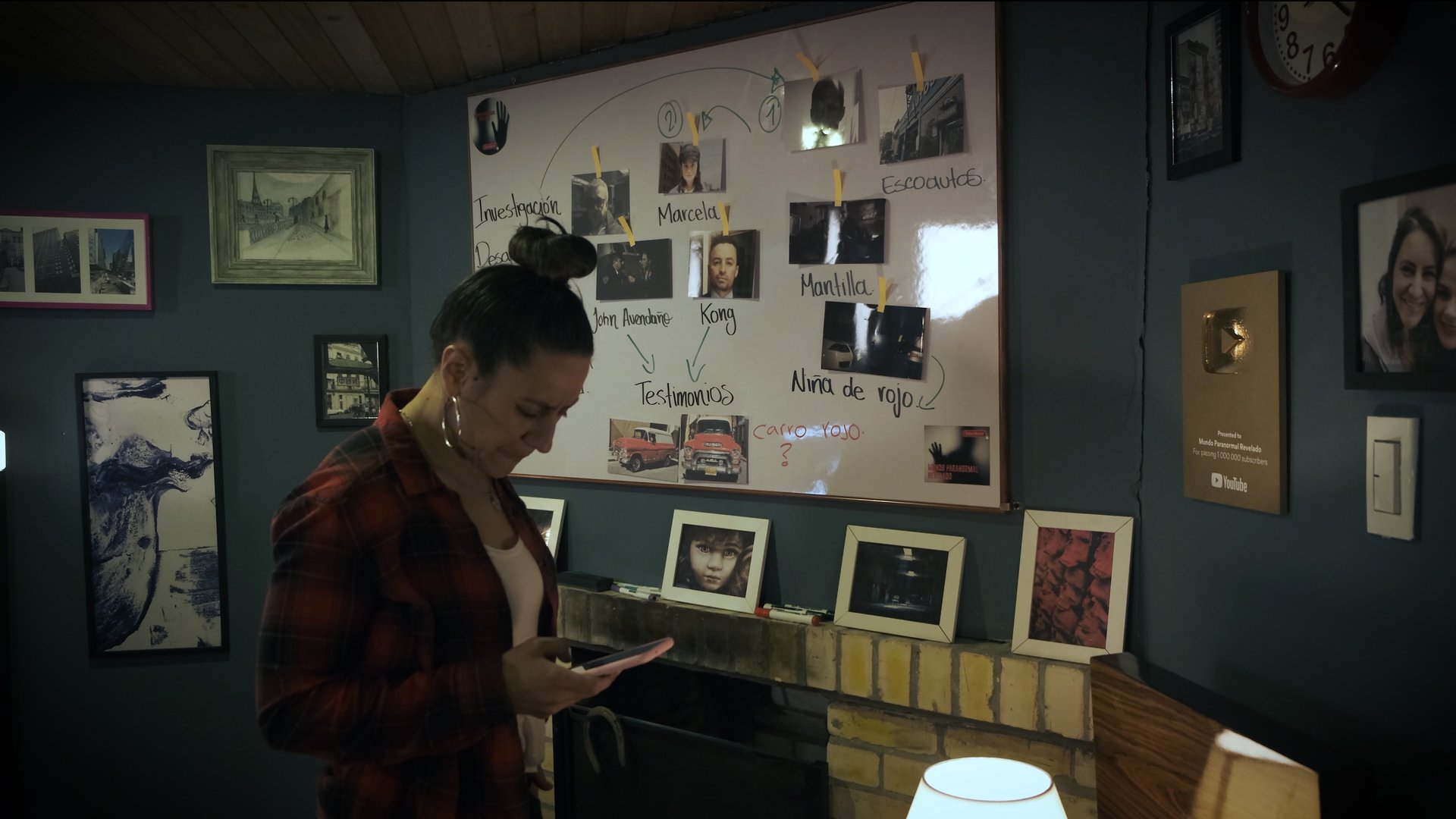
Found Footage from Within the Industry
Beyond the narrative aspect, found footage represents a strategic production model for the film industry. Unlike other genres that require sophisticated technical equipment, expensive visual effects, and multimillion-dollar marketing campaigns, this format is sustained by the premise of austerity turned into virtue.
Low-cost production, multimillion-dollar results
The economic appeal is undeniable. It is enough to remember that The Blair Witch Project was filmed with barely $60,000 and grossed nearly $248 million worldwide, while Paranormal Activity, shot for $15,000, reached more than $190 million. These cases became paradigmatic examples of return on investment that are still studied today in film and business schools.
The key lies in the fact that the genre allows expenses to be reduced to a minimum:
Home or semi-professional cameras replace high-budget equipment.
Small casts, often with unknown actors, reduce fees and enhance naturalism.
Everyday locations such as houses, forests, or abandoned buildings eliminate the need for expensive sets.
In this way, a project that in another genre would require millions can be produced at a fraction of the cost and still achieve a similar or even greater impact.
Organic marketing and virality
Another industrial advantage of found footage is that it reduces marketing costs. The very nature of the genre invites viewers to question whether what they are seeing is real, generating a sense of curiosity that multiplies through word of mouth and social media.
The most famous example is the campaign for The Blair Witch Project, which used the Internet to spread false news, photographs, and testimonies that reinforced the illusion of authenticity. In the case of Paranormal Activity, the producers launched limited screenings and allowed audiences to request the film in their city, fueling the sensation of a collective phenomenon.
Today, with streaming culture and viral content on social media, the genre continues to find fertile ground to grow, as its homemade aesthetic perfectly aligns with current forms of audiovisual consumption.
Adaptation to local markets
In Latin American countries, where budgets are usually more limited, found footage has proven to be a tool for democratizing horror cinema. Since it does not require large investments, it allows new voices to enter the industry and stories to be told from their own cultural contexts.
In Colombia, the case of Nigromante exemplifies this phenomenon. Under the direction of Edwin Daniel Díaz Galindo, founder of La Villa and co-director of the project, the film does not simply copy foreign formulas, but integrates elements of local reality: popular superstitions, ritual atmospheres, and neighborhood dynamics. This gives it an identity that connects with Colombian audiences and, at the same time, feels novel for international viewers.
Balance between economy, realism, and global reach
Ultimately, from an industrial point of view, found footage offers a unique combination:
Economy: it requires reduced investments.
Realism: it enhances immersion and verisimilitude.
Global reach: thanks to its simple and adaptable format, it transcends borders and cultures.
What began as a marginal experiment ended up consolidating itself as a resource that opens doors to new generations of filmmakers and has proven to be one of the most profitable genres in the horror industry.
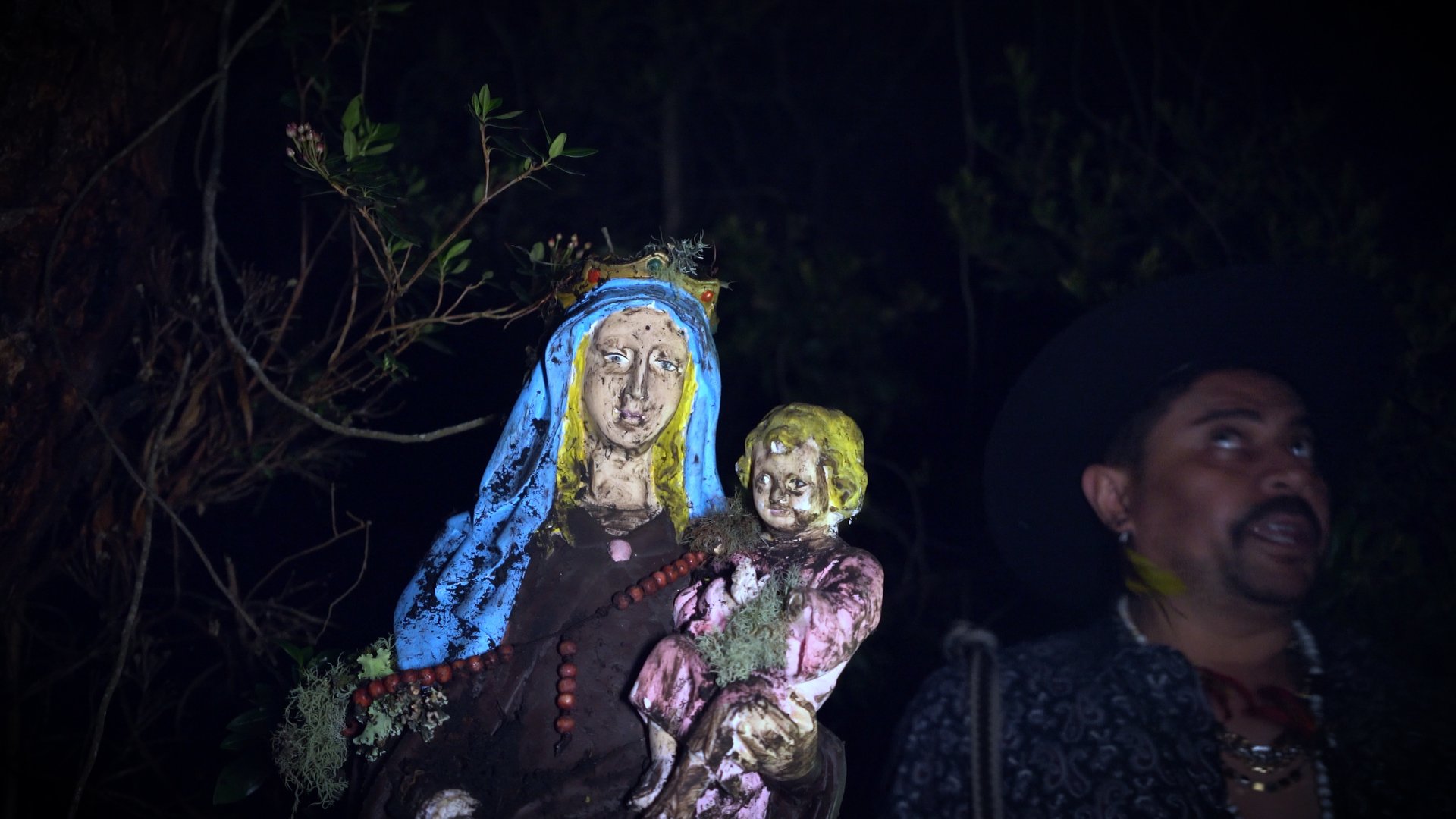
Narrative Elements that Define Found Footage
Found footage is not merely an aesthetic device: it is a distinct narrative language that breaks with the conventions of traditional cinema. Below are the main elements that characterize it and turn it into an experience that is as immersive as it is disturbing.
Handheld camera
Camera movement is one of the most recognizable signs of the genre. Imperfect framing, abrupt cuts, and shaky shots simulate the improvisation of whoever is recording. This device, which in other genres could be considered a technical error, here becomes a source of realism.
The camera functions as another character, as it determines what the viewer sees and what remains hidden.
Visual instability conveys anxiety and vulnerability: if the camera shakes or falls, the audience experiences the same confusion as the protagonists.
By renouncing the “perfect finish,” the film gains authenticity and approaches the aesthetic of home or amateur videos.
Sound and silence
In found footage, sound carries as much or more weight than the image. The creak of a door, a distant bang, or a barely perceptible whisper can be more disturbing than the explicit display of the monster.
Ambient sound replaces the traditional soundtrack, reinforcing the sensation of facing a real document.
Sudden silence creates expectation: the viewer knows something is about to happen, but does not know what or when.
Sound desynchronization (off-screen noises or voices without visible origin) adds mystery and multiplies psychological tension.
Fake documentary
Found footage is sustained by the illusion of authenticity. To achieve this, it employs resources typical of journalism or documentary filmmaking.
Testimonies and interviews: characters recount what happened as if they had been direct witnesses.
Home recordings: parties, trips, or everyday routines that gradually become contaminated by the strange.
“Found” material: deteriorated tapes, abandoned cameras, or digital files supposedly discovered after a tragic event.
The mixture of these formats reinforces the idea that we are facing a legitimate document rather than a planned fiction.
Subjective point of view
The viewer sees what the camera records in the first person. This technique, heir to classical subjective perspective, intensifies immersion: when a character runs, falls, or turns, the audience feels the same disorientation. The effect is double: on one hand, it emotionally brings the viewer closer to the experience; on the other, it limits the information received, increasing the mystery.
Absence as a resource
One of the most powerful traits of the genre is that it relies on what is not shown. Unlike conventional horror cinema, where monsters are usually displayed, found footage plays with the idea of the invisible threat. What is off-screen, what is only suggested or heard, ends up being more terrifying than any special effect.
Continuous diegetic time
Another characteristic is the illusion of real time. Many films in the genre simulate that what we see occurs in continuity, without traditional narrative cuts. This device creates a sense of urgency: the viewer accompanies the protagonists minute by minute, as if sharing with them an unedited recording.
Technological interface
With the arrival of the Internet and social media, the genre incorporated new narrative devices: video calls, security cameras, cellphone recordings, and live streams. These media not only update the format but also dialogue with the viewer’s everyday life, enhancing immersion.
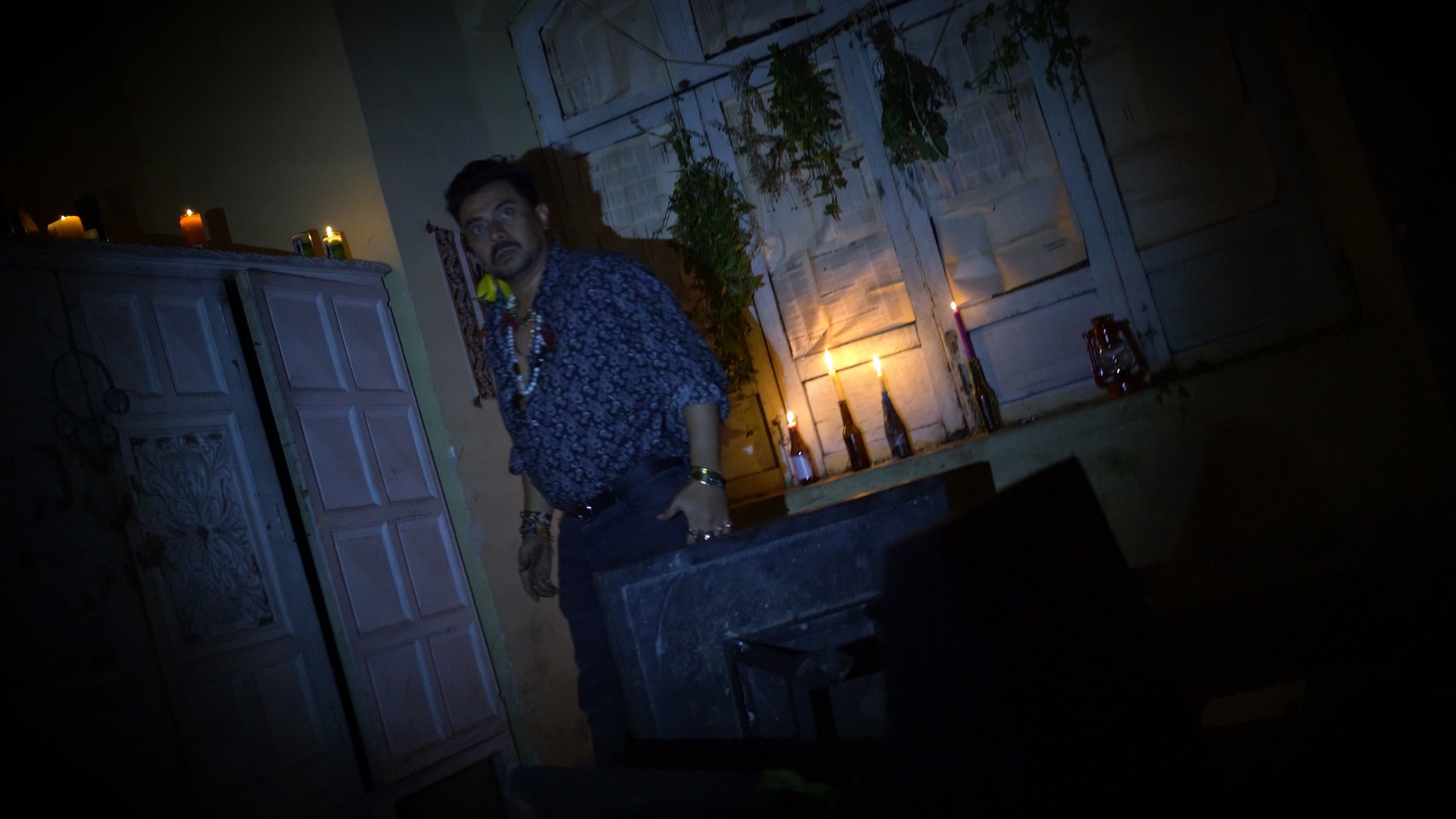
Cultural Impact of Found Footage
Found footage has transcended movie theaters to become a cultural phenomenon with ramifications in different areas of entertainment and contemporary digital life. Its power lies in the fact that it not only proposes a different way of narrating horror but also changed the way we consume and produce images in the digital era.
Television series
Several television shows have adopted the found footage aesthetic as a narrative resource:
American Horror Story: Roanoke (2016) built its entire season as a fake documentary with interviews, reenactments, and home recordings.
The Office and Parks and Recreation, although not horror, popularized the “mockumentary” (fake documentary), a direct heir to the found footage aesthetic, with characters speaking to the camera as if part of a real record.
In the paranormal field, productions such as Ghost Adventures or Most Haunted mix reality and fiction in a television format clearly influenced by this tradition.
Video games
The genre also inspired the gaming industry, which found in found footage a formula to increase player immersion.
Outlast (2013) turned the video camera into a survival tool: night vision and constant recording generate tension on the same level as films.
Resident Evil 7: Biohazard (2017) included sequences in the format of found VHS tapes, reinforcing the sensation of facing discovered documents.
Phasmophobia (2020), with its cooperative ghost-hunting dynamic using cameras and microphones, is practically interactive found footage.
Internet and social media
Perhaps the deepest impact is perceived in digital culture. The rise of viral videos, creepypastas, and live streams is directly connected to the logic of found footage: passing fiction off as reality to generate uncertainty.
Stories such as Slender Man were born in online forums, with supposedly “real” photos and recordings.
YouTube hosted projects like Marble Hornets (2009), a web series that revolutionized the genre by serializing horror in home videos.
On TikTok and other platforms, “paranormal” videos abound, replicating the codes of found footage and further blurring the boundary between fiction and amateur recording.
Popular culture and perception of fear
Found footage also changed the way we interpret audiovisual images. In the past, audiences went to the cinema knowing they would see carefully crafted fiction; today, the saturation of cameras in all areas of daily life means that any recording — blurry, improvised, unstable — can be perceived as potentially real.
This has two relevant cultural consequences:
Normalization of the amateur aesthetic: we no longer see imperfection as a flaw, but as a sign of authenticity.
Expansion of everyday fear: horror is no longer only in monsters or ghosts, but in the possibility that any home recording might reveal the inexplicable.
Influence on artistic creation
Beyond the industry, found footage also inspired experimental artists and audiovisual collectives who use recovered recordings or digital archives to question the relationship between image, truth, and memory. This intersection between horror and contemporary art demonstrates that the genre not only entertains but also provokes cultural reflection.
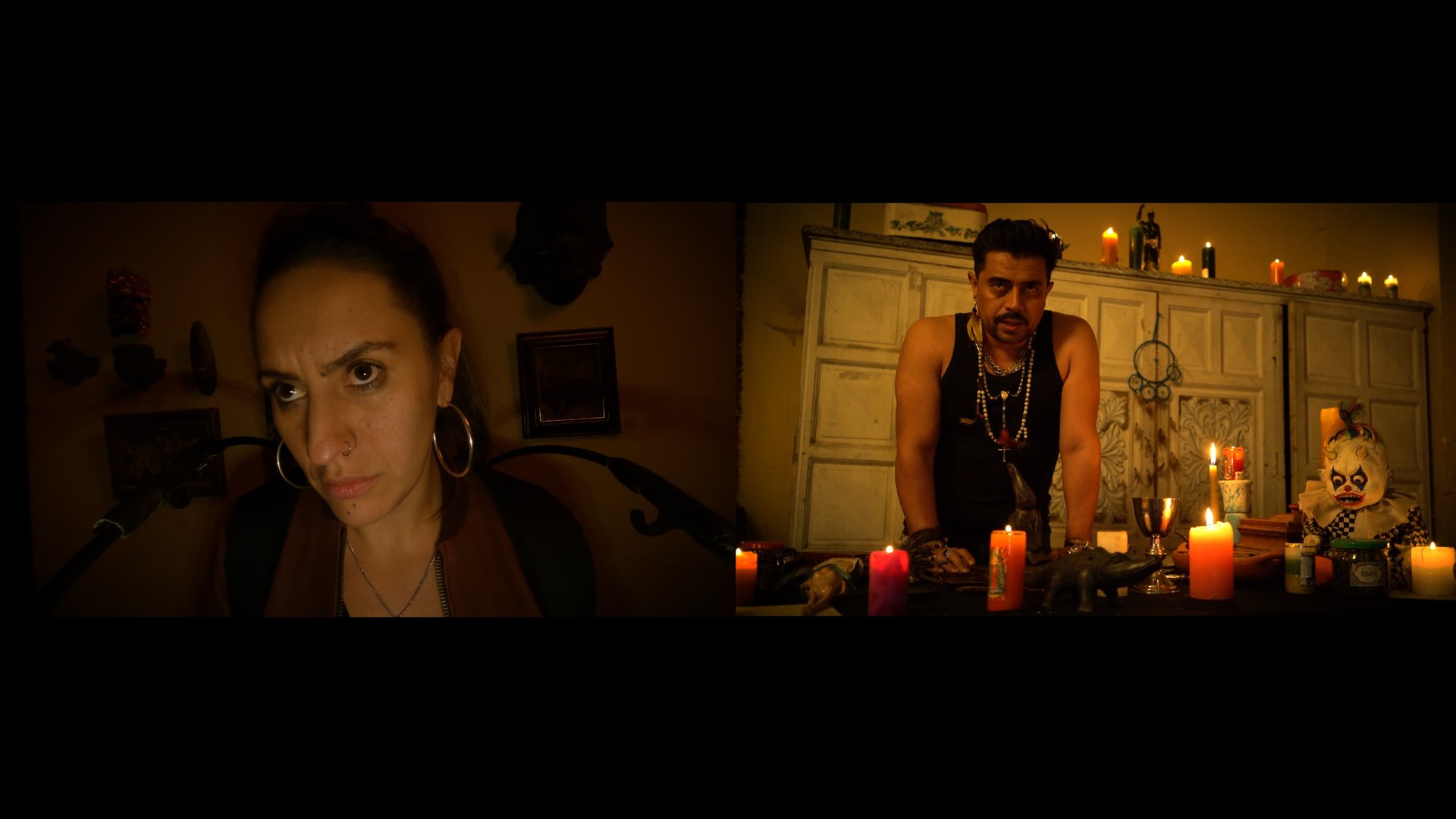
Criticisms and Limitations of the Genre
Although found footage has been revolutionary and widely celebrated, it is not exempt from criticism. As with any successful trend, its popularity has also revealed limitations that divide critics, audiences, and filmmakers.
Repetition of formulas
One of the most frequent criticisms is that, after the success of The Blair Witch Project and Paranormal Activity, many production companies saw the genre as an easy gold mine. This led to a flood of very similar films: a group of young people with cameras, paranormal events, noises in the dark, and an abrupt ending.
The result is that several productions seem like uninspired clones, lacking the freshness of the pioneers.
This saturation wears down the audience’s ability to be surprised, threatening to trivialize the genre.
Viewer fatigue
The visual style of found footage can be a double-edged sword.
Shaky camera and unstable framing generate realism, but also physical discomfort: dizziness, visual fatigue, and frustration.
Constant movement can become exhausting, especially in feature-length films.
Some viewers perceive this device not as an aesthetic tool, but as a forced trick that interferes with the experience.
Art vs. product
Another debate centers on whether found footage is a true narrative style or simply a cheap commercial formula.
Defenders of the genre argue that it allows innovation with minimal resources and that what matters is how its limitations are used to enhance fear.
Detractors see it as a shortcut: low-budget films seeking quick profitability without providing artistic depth.
More radical critics even consider it a genre that “cheapens horror,” reducing it to jump scares and technical tricks.
Difficulty of evolution
A constant challenge is the need to reinvent itself. Today’s audience is more skeptical and familiar with the genre’s codes.
What in 1999 seemed genuinely real may today feel artificial.
The saturation of home and viral videos on social media makes it difficult to distinguish fiction from everyday content, forcing filmmakers to seek new ways to surprise.
Narrative limitations
The format itself imposes restrictions.
The story must justify the recording: why do the characters keep filming instead of running away?
This need for narrative coherence can feel forced if not well resolved.
At times, scripts sacrifice character development or atmospheric construction in favor of maintaining the illusion of amateur recording.
Criticisms and Limitations of the Genre
Although found footage has been revolutionary and widely celebrated, it is not exempt from criticism. As with any successful trend, its popularity has also revealed limitations that divide critics, audiences, and filmmakers.
Repetition of formulas
One of the most frequent criticisms is that, after the success of The Blair Witch Project and Paranormal Activity, many production companies saw the genre as an easy gold mine. This led to a flood of very similar films: a group of young people with cameras, paranormal events, noises in the dark, and an abrupt ending.
The result is that several productions seem like uninspired clones, lacking the freshness of the pioneers.
This saturation wears down the audience’s ability to be surprised, threatening to trivialize the genre.
Viewer fatigue
The visual style of found footage can be a double-edged sword.
Shaky camera and unstable framing generate realism, but also physical discomfort: dizziness, visual fatigue, and frustration.
Constant movement can become exhausting, especially in feature-length films.
Some viewers perceive this device not as an aesthetic tool, but as a forced trick that interferes with the experience.
Art vs. product
Another debate centers on whether found footage is a true narrative style or simply a cheap commercial formula.
Defenders of the genre argue that it allows innovation with minimal resources and that what matters is how its limitations are used to enhance fear.
Detractors see it as a shortcut: low-budget films seeking quick profitability without providing artistic depth.
More radical critics even consider it a genre that “cheapens horror,” reducing it to jump scares and technical tricks.
Difficulty of evolution
A constant challenge is the need to reinvent itself. Today’s audience is more skeptical and familiar with the genre’s codes.
What in 1999 seemed genuinely real may today feel artificial.
The saturation of home and viral videos on social media makes it difficult to distinguish fiction from everyday content, forcing filmmakers to seek new ways to surprise.
Narrative limitations
The format itself imposes restrictions.
The story must justify the recording: why do the characters keep filming instead of running away?
This need for narrative coherence can feel forced if not well resolved.
At times, scripts sacrifice character development or atmospheric construction in favor of maintaining the illusion of amateur recording.

Frequently Asked Questions about Found Footage Cinema
What does found footage mean?
It literally means “found footage.” It is a narrative style in which recordings are presented as if they had been discovered after a strange or tragic event. The device plays with the idea that what we see was not produced as fiction, but is a real document that came to light by accident.
In practice, this generates an illusion of authenticity that confuses the viewer: are we watching a film or a real record? That ambiguity is the engine of the genre.
What was the first film of this style?
Although there is debate, most critics point to Cannibal Holocaust (1980), directed by Ruggero Deodato, as a precursor. It mixed fictional scenes with such a realistic documentary style that it even led to legal proceedings against the director, accused of showing real deaths.
However, the true boom came with The Blair Witch Project (1999), considered the work that popularized the genre worldwide. Thanks to its low budget, viral Internet campaign, and ability to suggest more than it showed, it marked a before and after in horror history.
Why does it generate so much fear?
The impact of found footage is due to several factors:
Breaking the barrier between fiction and reality: the viewer does not observe from a distance, but feels part of what is happening.
Use of the everyday: houses, forests, offices, video calls… settings we all recognize that suddenly become terrifying spaces.
The power of suggestion: by not explicitly showing the “monster,” it forces the audience’s mind to fill the gaps, constructing a more personal and intense fear.
Total uncertainty: endings are often abrupt, without clear explanations, leaving the feeling of having seen a real record interrupted by tragedy.
Does it exist in Latin America?
Yes, and with very interesting proposals that show how the genre adapts to different cultural contexts.
In Uruguay, La Casa Muda (2010) experimented with the long take as a narrative device, adding tension to what was already unsettling.
In Costa Rica, El Sanatorio (2010) relied on local legends and the popular imagination surrounding abandoned hospitals.
In Colombia, Nigromante represents a singular case: it incorporates ritual and cultural elements of its own, as well as the vision of Edwin Daniel Díaz Galindo, founder of La Villa and co-director, who brings a neighborhood-based and authentic approach that breaks with the imitation of foreign models.
These examples prove that found footage is not an exclusive product of Hollywood, but a flexible narrative language capable of adapting to the identities and fears of each region.
How does it differ from mockumentary?
Although both play with the appearance of reality, there are key differences:
Found footage presents itself as recordings discovered after a mysterious or violent event.
Mockumentary simulates being a complete documentary, with interviews, narrators, and television style, but always under the premise of fiction.
The former seeks to generate fear through uncertainty; the latter may be comedic, critical, or dramatic, depending on its intention.
Can this genre still innovate or is it exhausted?
Although some believe the formula has been overused, the truth is that found footage continues to reinvent itself thanks to:
New technologies (video calls, live streams, social media).
New cultures and contexts (integration of folklore, superstitions, and local traditions).
Formal experimentation, such as the use of multiple cameras, surveillance footage, or altered digital archives.
For this reason, rather than being exhausted, the genre seems to be in a process of constant transformation, in tune with the way we consume images today.
Los mejores artistas recomiendan LA VILLA PRODUCCIONES