Types of Film Shots and How to Use Them Effectively
Learn the most common types of film shots, what they are used for, and how to apply them in cinematic storytelling with practical examples.
2/17/202613 min read

Introduction
In every audiovisual production — whether film, series, documentaries, music videos, commercials, or digital content for social media — the choice of shot is one of the most decisive decisions for building a coherent and emotionally effective visual narrative. A shot is not just a framing: it is a narrative tool that defines what the viewer sees, how they see it, and, above all, what they should feel about what they are observing. That’s why understanding the types of shots most used and what they are for is indispensable for anyone looking to communicate with intention, whether in a professional environment or in independent projects.
Shots become the secret language of audiovisual storytelling: they guide the viewer’s gaze, structure rhythm, reveal details, suggest atmospheres, and allow a story to exist beyond dialogue or action. When a director, cinematographer, or content creator masters this language, they can lead the audience toward very specific emotions: closeness, tension, intimacy, power, fragility, grandeur, humor, or even bewilderment. Each shot carries symbolic and psychological weight that directly affects the viewer’s experience.
In professional practice, selecting the right shot involves answering essential questions: What do I want the audience to feel in this scene? What information is relevant? Should I show the environment or focus on the character? Is it a moment of intimacy or expansiveness? Do I want the viewer to observe, participate, or experience the action from within? It is in these decisions that applying the types of shots most used and their purpose becomes a clear methodology for building a strong visual narrative.
Moreover, the digital era has transformed the use of shots. While in traditional cinema narrative was built with carefully planned sequences, on social media platforms like Instagram, YouTube, or TikTok shots must resolve emotions, information, and rhythm in seconds. For example, close-ups generate immediate connection, while cutaways reinforce dynamism and clarity in tutorials, product videos, or short storytelling. In advertising, close and detail shots are key to selling a benefit or evidencing a brand attribute. In documentaries, medium and wide shots offer naturalness, context, and credibility. In fiction, the combination of wide shots and close-ups helps build tension, intimacy, or epic scale depending on the scene.
Technique also plays a decisive role. Shot choice is not isolated: it is complemented by focal length, depth of field, camera angle, movement, and lighting. The same scene can change completely if filmed with a wide-angle, telephoto, or standard lens; and these elements interact directly with the type of shot chosen. That’s why knowing the types of shots most used and what they’re for also means understanding how technical decisions affect visual language.
Finally, mastering shots allows for greater precision in pre-production and shooting. A well-constructed shot list not only saves time and money, but also provides artistic clarity among direction, photography, art, and editing teams. When all departments understand the intention behind the shot, execution becomes more efficient and consistent.
In this guide you will find an exhaustive explanation of the types of shots most used and what they’re for, accompanied by a professional perspective that can be applied to film, advertising, and digital content. The goal is for you to make more conscious and narratively solid decisions, achieving clear, powerful, and memorable productions.
1. What Shots Are and Why They Matter
In audiovisual language, a shot is not just a “take” or a pretty frame: it is the smallest unit that builds a story. A shot encompasses everything that happens from the moment “action” is called to when “cut” is said. In that small fragment of time, how the viewer perceives the information, understands the scene, and receives emotions is defined. Each shot is a conscious decision made by the director, cinematographer, and creative team.
A shot communicates much more than what is seen on screen. Distance, angle, point of view, movement, composition, lens, lighting, and even the duration of that shot directly affect the viewer’s experience. That’s why shots are said to be the vocabulary of cinematic language: with them visual sentences are constructed, ideas are developed, and what words cannot convey is expressed.
Understanding the types of shots most used and what they are for is understanding how visual narrative works. Every shot fulfills a specific purpose: some contextualize space, others connect emotionally with characters, others generate tension or rhythm, others reveal important information, and others guide the viewer’s gaze. Nothing is placed at random. Even the “simplest” shot has an aesthetic and narrative intention behind it.
Shots also establish the emotional point of view of the story. An extreme close-up can expose a character’s vulnerability, while a wide shot can make the viewer feel like an external observer. A low angle can grant power to a protagonist, while a high angle can make them appear small, fragile, or insecure. All this happens without the need for dialogue: only through the image.
Another essential aspect is that shots define the rhythm and tone of a scene. Long and contemplative shots generate calm, melancholy, or reflection. Short, close, and quick shots contribute energy, dynamism, or tension. The duration of a shot is part of its meaning. The same action can feel smooth, chaotic, romantic, or violent depending on how the shot type is planned and combined.
Moreover, shots orient editing. Editing would not be possible without the variety and intention behind each take. The camera records fragments that the editor later transforms into a meaningful sequence. That’s why, when you truly know the types of shots most used and what they are for, it is easier to create a coherent narrative flow, maintain visual continuity, balance tempos, reinforce emotions, and build an immersive experience in film, advertising, documentary, or digital content.
Shots also determine how space is perceived. A room can seem cold or intimate depending on the chosen shot. A character can seem part of an environment or completely isolated from it. Depth of field, focal length, and the relationship between subject and background give a shot a spatial meaning that fits within the story being told.
Finally, mastering shots means learning to speak the language of the image. The more you understand how each shot works and what its purpose is, the clearer the narrative becomes and the more professional your work looks. Knowing how to apply the types of shots most used and what they are for allows you to make stronger, more conscious, and more effective creative decisions, ensuring that each scene fulfills its emotional, narrative, and aesthetic objective.
2. The Most Common Types of Shots and Their Purpose
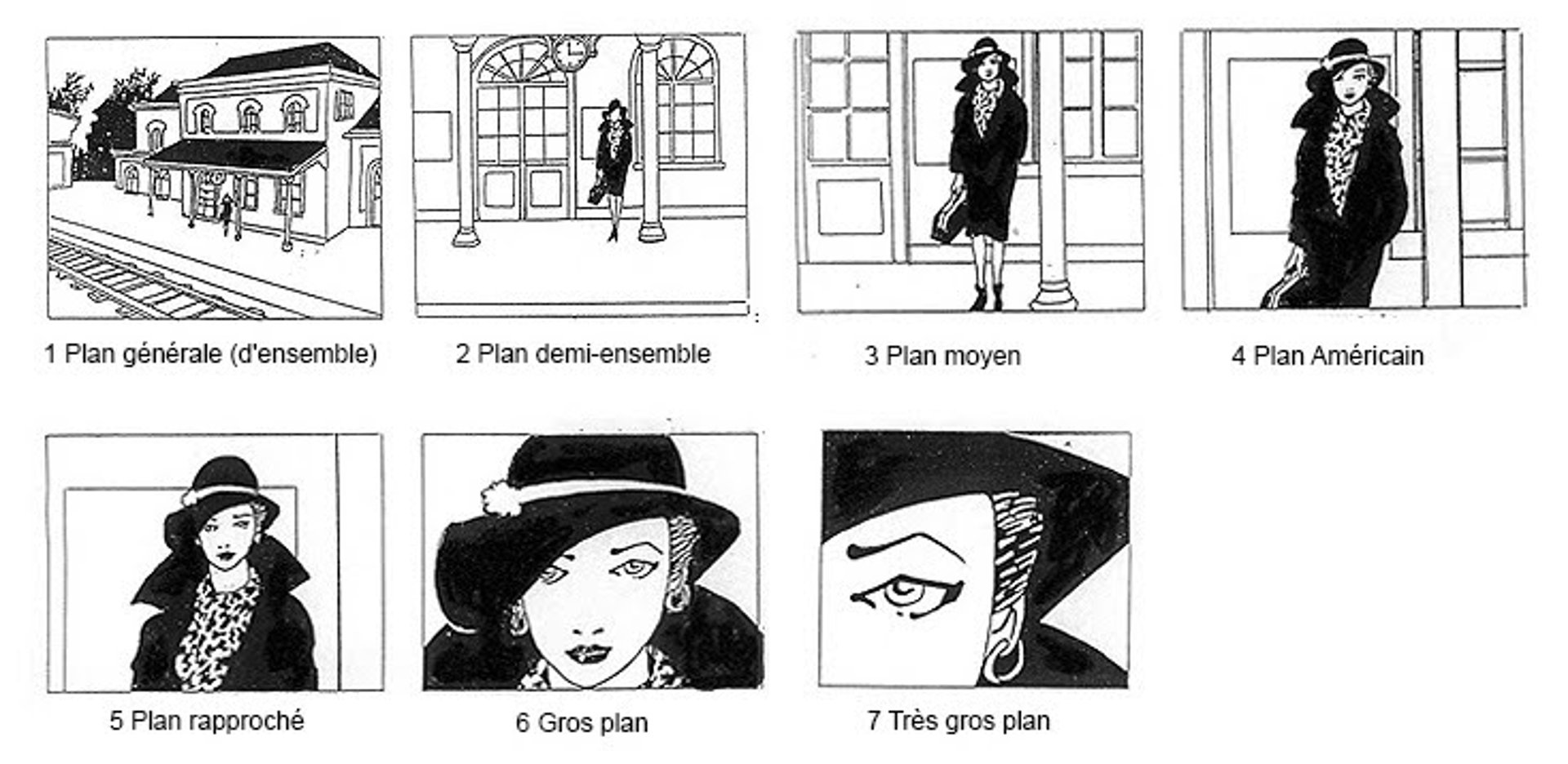
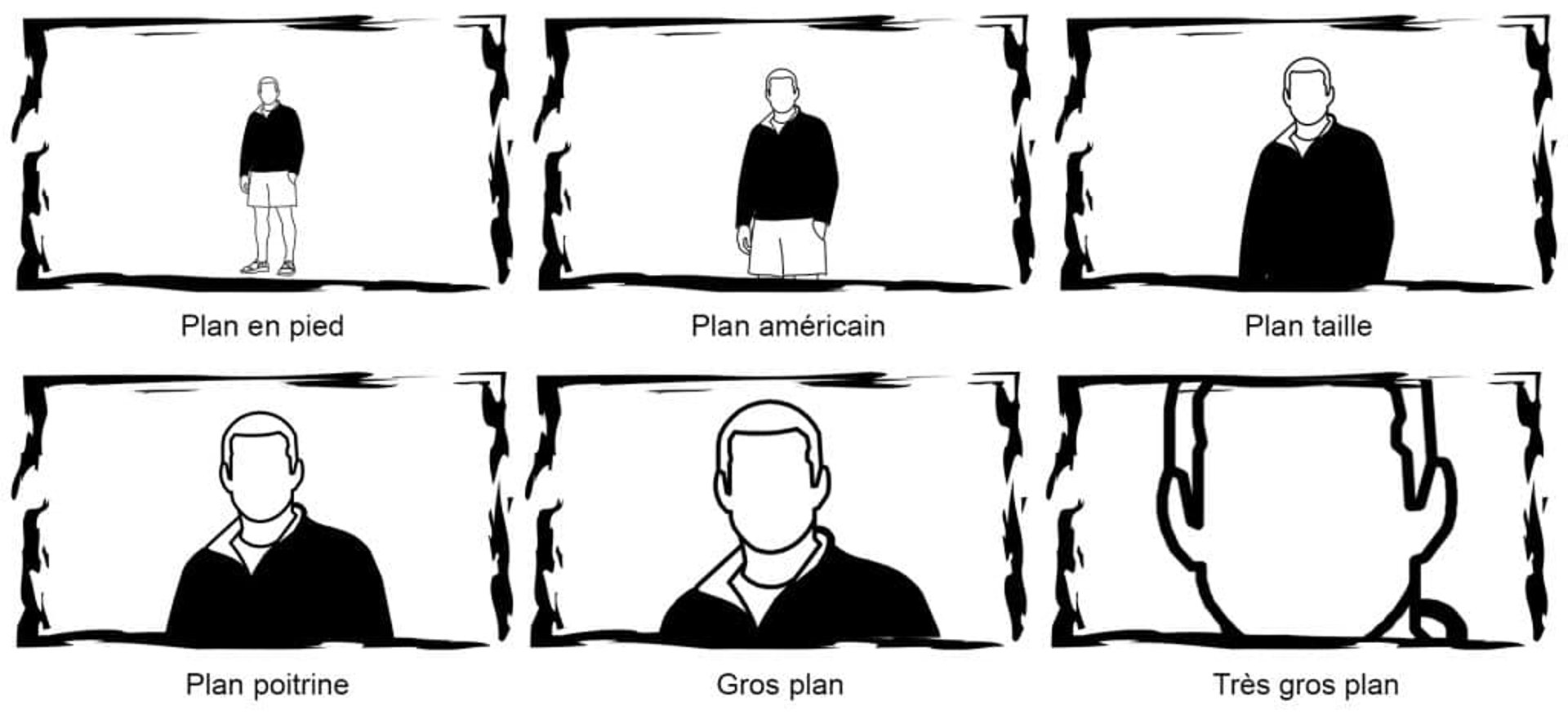
Extreme Wide Shot (EWS)
This shot shows vast spaces such as landscapes or large urban environments. The character, if present, appears small within the frame.
Purpose:
Establish location and context
Convey scale, isolation, or grandeur
Introduce the atmosphere of a scene
Wide Shot (WS)
The wide shot frames the character’s entire body while maintaining part of the environment visible.
Purpose:
Show body language
Maintain spatial continuity
Present interaction between character and environment
Medium Shot (MS)
Frames the character from the waist up.
Purpose:
Dialogue scenes
Balanced emotional connection
Interviews and conversations
Medium Close-Up (MCU)
Frames from the chest up.
Purpose:
Emphasize facial expressions
Create a stronger emotional connection
Common in interviews and testimonials
Close-Up (CU)
Focuses on the face or a specific object.
Purpose:
Highlight emotion
Show important narrative details
Increase dramatic intensity
Extreme Close-Up (ECU)
Isolates a very small detail (eyes, hands, objects).
Purpose:
Create tension
Emphasize symbolism
Direct attention to key elements
Over-the-Shoulder Shot (OTS)
Shows a character from behind another person’s shoulder.
Purpose:
Dialogue scenes
Establish relational dynamics
Maintain spatial orientation
Point of View Shot (POV)
Shows what a character sees.
Purpose:
Increase immersion
Strengthen identification with the character
Build subjective storytelling
3. Camera Angles and Their Meaning
Camera angles are not merely technical variations in camera placement; they are psychological and narrative tools that shape how the audience perceives characters, situations, and power dynamics within a scene. While shot size determines how much we see, camera angle determines how we feel about what we see.
A subtle shift in angle can completely transform the emotional interpretation of a moment. Angles influence hierarchy, vulnerability, tension, realism, and even moral perception. Below is a deeper explanation of the most commonly used camera angles and their narrative impact.
High-Angle Shot
In a high-angle shot, the camera is positioned above the subject and angled downward.
This angle visually diminishes the subject within the frame. By placing the viewer in a higher physical position, the character often appears smaller, less powerful, or emotionally exposed.
Narrative and Psychological Effect:
Suggests vulnerability, fragility, or weakness
Can emphasize defeat, insecurity, or isolation
Creates emotional distance between viewer and subject
Reinforces power imbalance in dialogue scenes
In dramatic storytelling, high angles are frequently used during moments of emotional collapse, realization, or submission. In thrillers or suspense films, they can create a sense of surveillance — as if someone is watching from above.
However, context matters. In some cases, a high-angle shot can also simply provide spatial clarity without psychological intention, particularly in action sequences or choreography-heavy scenes.
Low-Angle Shot
In a low-angle shot, the camera is placed below the subject and angled upward.
This angle enhances the physical presence of the character. The subject appears taller, stronger, and more dominant because they visually occupy more space in the frame.
Narrative and Psychological Effect:
Suggests power, authority, or superiority
Creates intimidation or admiration
Reinforces leadership or heroism
Amplifies dramatic tension
Low angles are commonly used in heroic entrances, moments of triumph, or scenes where a character asserts control. In antagonistic portrayals, the same angle can make a villain appear threatening or oppressive.
Architectural elements such as ceilings or tall structures in the background often intensify the feeling of grandeur or dominance when combined with this angle.
Eye-Level Shot
The eye-level shot places the camera at the subject’s natural eye height.
This is considered the most neutral and realistic angle because it mirrors how we typically perceive others in everyday life. It neither empowers nor diminishes the subject.
Narrative and Psychological Effect:
Conveys balance and neutrality
Creates realism and relatability
Encourages empathy without manipulation
Maintains conversational intimacy
Eye-level shots are extremely common in dialogue scenes, interviews, documentaries, and naturalistic storytelling. Because they do not impose a strong psychological bias, they allow performance and narrative context to drive emotion rather than visual dominance.
This angle is particularly effective in character-driven scenes where authenticity and subtlety are key.
Dutch Angle (Tilted Shot)
In a Dutch angle, the camera is tilted so that the horizon line is not level. The frame appears slanted or diagonally imbalanced.
This technique immediately disrupts visual stability. Humans are accustomed to horizontal balance in perception; when the frame tilts, the viewer subconsciously senses that something is “off.”
Narrative and Psychological Effect:
Suggests instability or psychological tension
Indicates chaos, danger, or confusion
Reflects internal conflict
Creates visual unease
The Dutch angle is widely used in thrillers, psychological dramas, horror films, and moments of emotional disruption. It can visually represent a character’s distorted mental state or signal that reality is unstable.
However, because it is visually striking, it must be used intentionally. Overuse can reduce its impact or feel stylistically exaggerated.
Why Camera Angles Matter in Visual Storytelling
Camera angles shape audience perception before a single line of dialogue is spoken. They subtly communicate hierarchy, emotion, and narrative intention.
A scene filmed entirely at eye level feels grounded and natural. Introduce a low angle, and the emotional power dynamic shifts. Add a high angle, and vulnerability emerges. Tilt the frame, and tension rises instantly.
In professional filmmaking, angles are rarely accidental. They are chosen to reinforce theme, character development, and dramatic structure. Combined with shot size, lighting, and movement, camera angles become one of the most powerful tools in cinematic language.
Understanding how and when to use each angle allows creators to control not just what the audience sees — but how they interpret and emotionally respond to it.
4. Shots According to Point of View
Shots based on point of view determine where we are “looking” from within the scene, and therefore define the emotional and psychological relationship between the viewer, the character, and the action. They are essential for controlling audience identification, the sense of distance or proximity, and narrative subjectivity. Below, each is explored in depth.
Subjective Shot (POV)
The subjective shot places the camera exactly in the visual position of the character, simulating that the viewer is seeing through their eyes. In this shot, framing and movement must imitate human anatomy: eye height, breathing, hesitation, focus, and limitations of the visual field.
Technical Characteristics
Camera height: Adjusted to the character’s eye level (eye-level), unless the character is sitting, crouching, running, or even falling.
Movement: Usually includes micro-movements, slight shakes, or natural shifts that imitate body motion (unless it is a stylized POV).
Depth of field: A moderate focus is generally used to simulate how the human eye does not keep absolutely everything sharp at once.
Recommended lenses: Between 24mm and 35mm on full-frame cameras, as they approximate the human angle of view (between 43° and 60°).
Transitions: May include simulated blinks, quick focus shifts, or abrupt movements to reinforce the subjective illusion.
Narrative and Emotional Use
Allows total immersion, making the viewer experience what the character experiences: fear, anxiety, surprise, vulnerability, or even joy.
Used in horror films (when we “see the monster” approaching), action scenes (when the character runs or shoots), drama (when someone observes something shocking), and social media content with a “point-of-view” style.
In video games, it became a language of its own (first-person), and audiovisual storytelling has adopted much from this style.
When to Use It
When you want the audience to feel rather than simply observe.
To reveal partial, biased, or limited information.
To generate tension based on what the character does not know or cannot see to the sides.
Over the Shoulder (OTS)
The OTS (over-the-shoulder) shot is filmed by placing the camera behind a character so that their shoulder and part of their head appear at the edge of the frame, while the focus is on the character or object in front of them. It is considered one of the most important shots in classical audiovisual storytelling.
Technical Characteristics
Composition: The shoulder enters the foreground as a spatial reference; the main character is centered or placed on a third of the frame.
Angle: Usually a medium angle, neither too high nor too low, to maintain naturalism and continuity of the axis of action.
180° Rule: Fundamental to avoid spatial confusion; both OTS shots in a dialogue must respect continuity.
Lens choice: Lenses between 50mm and 85mm are common to slightly compress space and focus on the main character.
Focus: The shoulder is normally out of focus to create depth and direct attention toward the main subject.
Narrative Use
It is the foundation of dialogue scenes because it provides spatial and emotional context.
It makes the viewer feel “inside” the conversation.
In dramas and confrontations, it creates tension: the proximity between characters, shoulder posture, and slight blur can communicate power, distance, rivalry, or intimacy.
It is also used in scenes where a character observes something significant, such as an important object or relevant landscape.
Key Narrative Advantage
It connects emotional distance and visual direction, placing the viewer exactly where they need to be to understand the scene.
Object Shot
The object shot consists of placing the camera as if it were an object within the scene, giving it a unique, artificial, and sometimes even humorous point of view. It does not aim to replicate human vision, but rather to grant narrative perspective from an inanimate element.
Technical Characteristics
Unusual height and position: It may be inside a box, behind a bottle, inside a suitcase, attached to a vehicle, in a character’s hand, or even inside an appliance.
Lens choice: Wide-angle lenses (16mm–24mm) are frequently used to capture more environment in confined spaces.
Depth of field: Generally wide, so that both the object and its surroundings remain sharp.
Set preparation: Stability of the object must be ensured, lighting must work within the compartment, and composition must clearly communicate that the camera represents the object.
Aesthetic: May include distortions or vignetting as intentional effects to emphasize the idea of a small or enclosed space.
Narrative Use
Allows situations to be shown from unconventional and highly creative perspectives.
Used in advertising to emphasize product presence (“as if the object reacts”).
In film and series, it can add humor, surprise, or a unique spatial perspective.
In digital content, it helps create differentiated styles, offering shots that surprise viewers and break the monotony of classical audiovisual language.
Typical Examples
Camera inside a refrigerator when a character opens the door.
Camera in the glove compartment of a car.
Camera in a hand or even on a weapon, simulating that the object “observes” the action.
Camera inside a bag or box that someone opens, revealing a secret or surprise.
Narrative Value
It breaks the visual fourth wall by granting perspective to inanimate objects, generating humor, dynamism, or stylized dramatization.
5. Shots According to Movement
Camera movement does not merely add dynamism: it constructs meaning, directs attention, controls emotional rhythm, and defines how the viewer experiences space, time, and narrative intention. Each movement implies technical decisions (camera weight, stabilization, lens choice, distance to subject, rail type, speed, spatial relationship) that directly influence the final aesthetic.
Below, the most commonly used movements are expanded.
Pan
A pan is a horizontal movement in which the camera rotates on its own axis to the left or right. Although it seems simple, its narrative impact is enormous.
Narrative and Technical Functions
Gradually reveal information.
Create spatial continuity without cutting.
Follow lateral character movement.
Establish visual rhythm (slow = contemplation; fast = urgency or chaos).
Maintain axis continuity.
Technically, it requires speed control, a fluid tripod head, appropriate focal length (telephoto lenses make pans more sensitive), and uniform movement for smooth transitions.
Tilt
A tilt is a vertical movement in which the camera moves up or down from a fixed point.
Narrative Uses
Reveal a character from feet to face.
Show height or grandeur of objects.
Discover hidden elements.
Create tension through slow vertical movement.
Technically, balance control is essential. In long focal lengths, even small movements can feel abrupt. Movement speed suggests emotion: abrupt = surprise; slow = solemnity.
Travelling / Dolly
A travelling shot involves physically moving the camera through space (forward, backward, or sideways). Unlike pan or tilt, travelling changes spatial relationships between camera and subject.
Narrative Functions
Total immersion.
Emotional accompaniment.
Build tension through slow forward movement.
Establish scale and depth.
Organic character tracking.
Equipment
Dolly on rails → smoother, cinematic movement.
Slider → short, controlled moves.
Vehicles/platforms → extended motion.
Speed control defines emotional tone.
Wide lenses amplify depth; telephoto lenses compress space.
Steadicam / Gimbal
These stabilization systems allow fluid, floating movement without visible shake.
Narrative Uses
Intimate character tracking.
Naturalistic movement.
Long takes.
Elegant, dynamic aesthetic (music, fashion, lifestyle).
Technical Considerations
Perfect balance.
Operator ergonomics.
Wide-angle lenses for stability.
Movement choreography.
A well-operated steadicam can transform a simple scene into a memorable moment.
Zoom
Zoom does not move the camera physically; it changes focal length to bring the subject closer or farther optically.
Narrative Uses
Dramatically emphasize a detail.
Isolate character from background.
Sudden visual impact (fast zoom).
Stylized aesthetics.
Dolly-zoom (Vertigo effect): background distortion while subject remains same size, creating anxiety.
Technical Notes
Alters spatial compression.
Requires stabilization in long focal lengths.
Speed communicates emotion.
Cinema zoom lenses reduce focus breathing.
Why Camera Movements Are a Language in Themselves
Each movement responds to intention:
Subjectivity
Revelation
Suspense
Action
Intimacy
Spatial exploration
Emotional tension
Narrative depth
The camera does not move “for aesthetics”: it moves because the character, the story, or the emotion demands it. A scene’s meaning can completely change depending on movement speed, direction, continuity, or distance.
6. How to Choose the Right Shot According to Your Goal
Choosing the right shot is not merely aesthetic — it is a narrative, technical, and emotional decision. Each shot modifies what the audience feels, understands, and anticipates. Understanding the most commonly used types of shots and what they are used for allows you to build intention in every moment of your story.
Proper choice combines:
Shot scale
Depth of field
Camera angle
Lens selection
Movement
Narrative rhythm
Below is a guide for different types of projects.
Advertising
Advertising aims to capture attention quickly.
Detail shots → highlight textures and product attributes (macro lenses, shallow depth of field).
Close-ups → show emotional impact.
Controlled movement → dollies, sliders, smooth gimbal work for premium feel.
Understanding shot types helps guide the viewer’s eye toward specific benefits or sensations.
Documentary
Focuses on realism.
Wide shots → context and geography.
Medium shots → balance and interviews.
Long takes → realism and continuity.
B-roll → texture and editing flexibility.
Shot choice respects authenticity and clarity.
Social Media
Fast, engaging, vertical-first language.
Very tight shots → instant intimacy.
Dynamic movement → retention.
POV shots → immersion.
Wide lenses → maximize vertical framing.
Understanding shot types improves engagement and rhythm.
Narrative Cinema
Complex and intentional.
Wide shots → atmosphere and scale.
Medium shots → dialogue balance.
Close-ups → emotional depth.
American shots → physical tension.
Angles → psychological meaning.
Lens + lighting + movement → reinforce dramatic intent.
In cinema, mastering shot types gives total control over narrative, emotion, and viewer experience.
At the end of this journey through the different types of shots and their narrative use, it is important to remember that no single technique creates a great story on its own. What truly transforms a production is the way each shot gains meaning within a cohesive creative vision.
At La Villa Producciones, we have spent more than a decade turning ideas into powerful, emotional, and memorable images. Our team understands how to unite narrative, aesthetics, and strategy so that every project — from documentaries and commercials to digital content and cinema — develops a strong and authentic visual language.
If you are looking for a partner to elevate the quality of your productions, develop professional content, or simply explore new ways of telling stories, we invite you to discover our work and see how we can take your project to the next level.
Here, every shot matters… and we know how to make it shine.
Los mejores artistas recomiendan LA VILLA PRODUCCIONES